
No wood. Real glass.
Rated to −20°F.
A RREV is not priced against other rigs. It is priced against what it takes to build one properly.
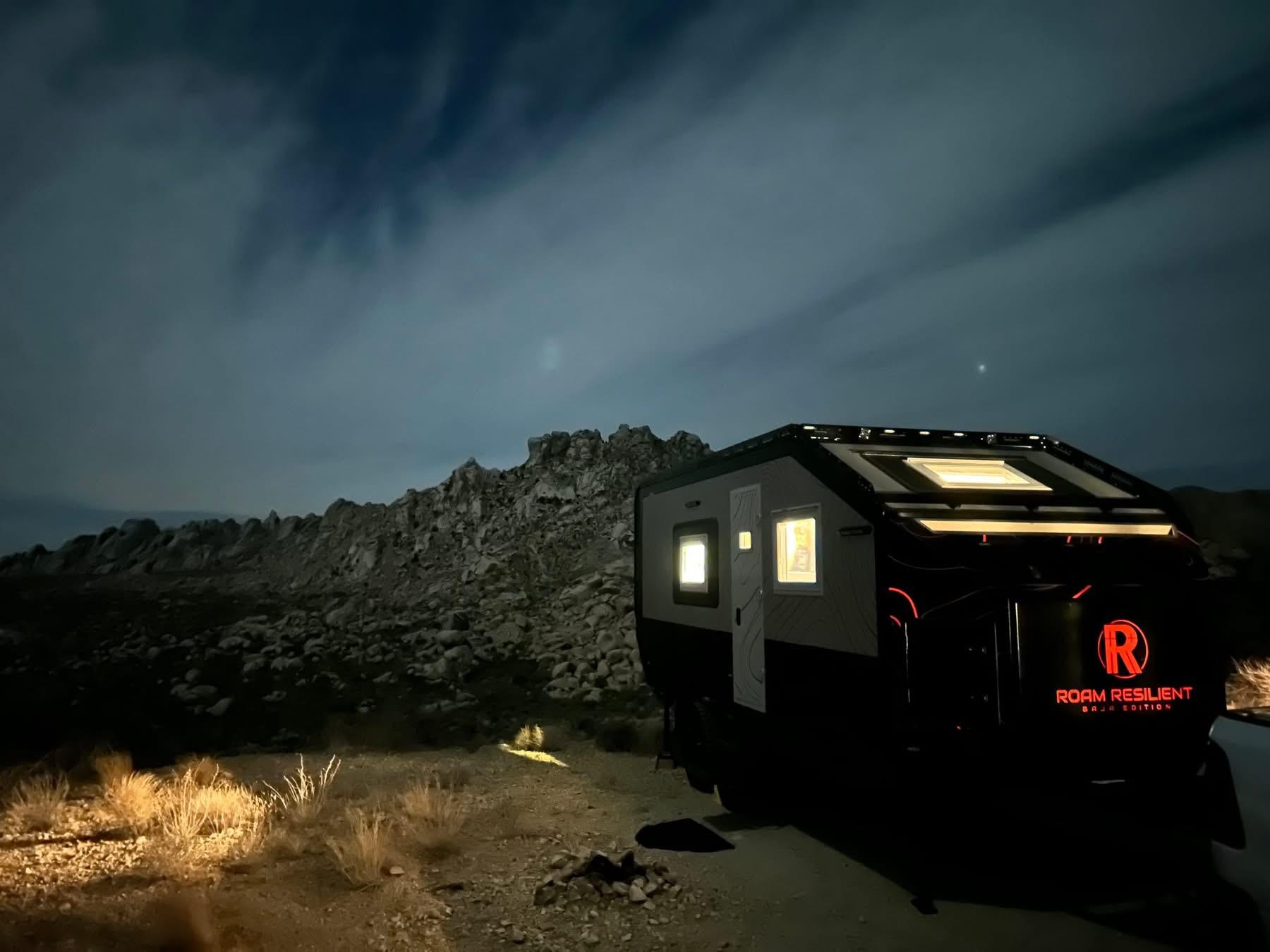
No wood in the shell.
Nothing in the walls, floor or roof can rot.
Every RREV is built from the same panels. An aircraft-grade aluminum skin outside, a fibreglass skin inside, and between them a structural PET foam core.
Aluminum takes the weather and the trail. Fibreglass gives a smooth interior that wipes clean. The core is dense enough to carry load as well as insulate, so the panel is the structure, not a filling inside a frame.
PET is closed-cell, so it does not absorb water. Nine polyamide thermal breaks stop the cold bridging through the frame.
- Wall
- 70 mm · 2.75 in
- Floor
- 80 mm · 3.15 in
- Core
- PET foam · 90 kg/m³
- Thermal breaks
- 9 · polyamide
- Wood in the shell
- None
Real glass, not plastic.
Look at the windows. That is glass.
Most expedition rigs use acrylic windows, which scratch, haze and yellow. Ours are dual-pane glass: clear for the life of the rig, and you can clean them with anything.
The frames are aluminum with polyamide thermal breaks, the same construction used in architectural windows. The break stops the cold outside from travelling through the metal, so the frames do not sweat or frost in winter.
The door is built the same way.
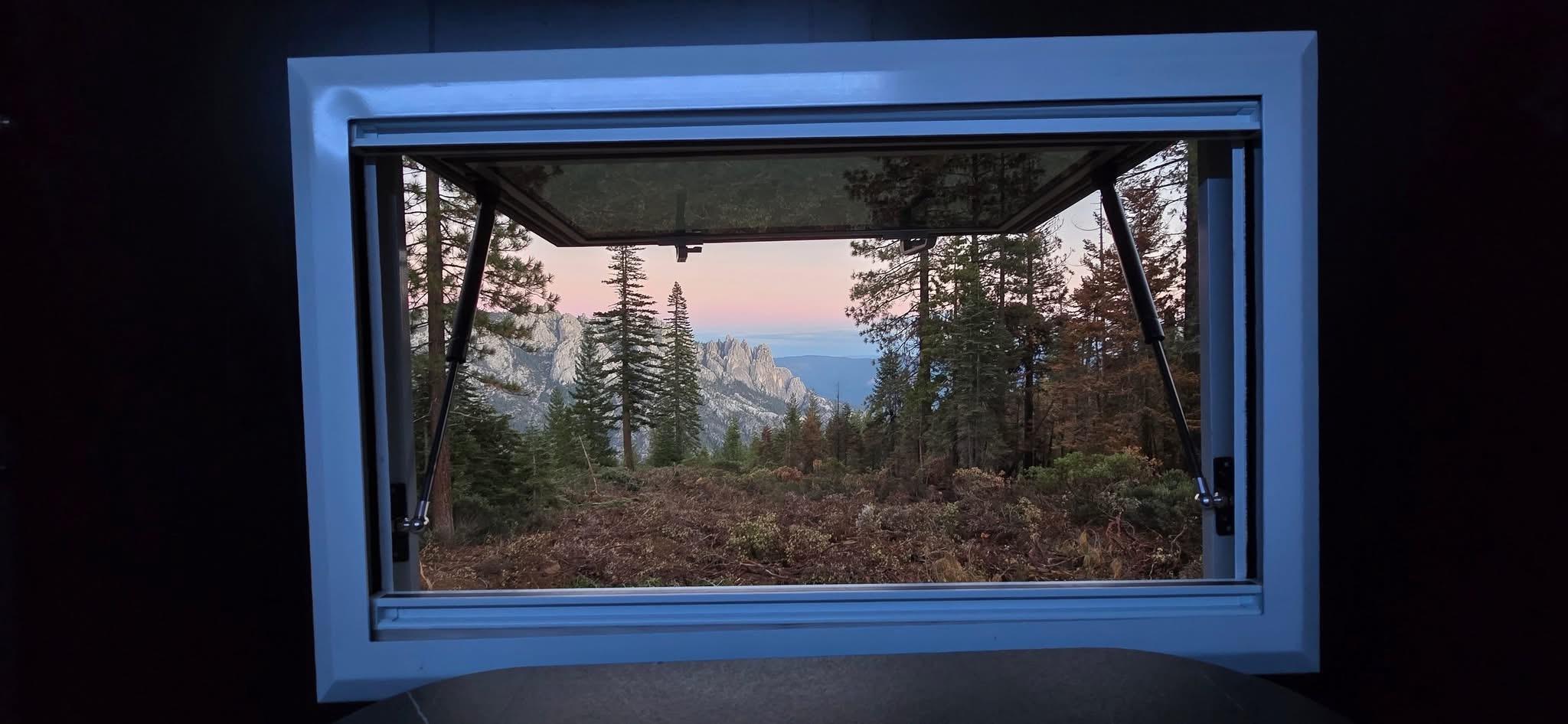
Polyamide thermal breaks.
Metal carries cold. The break stops it.
Aluminum is strong, but it conducts heat. Without a break, a metal frame carries the cold straight through the wall, and the inside sweats or frosts.
A polyamide strip separates the metal outside from the metal inside. Nine of them run through the shell, and the window and door frames are built the same way.
Rated −20°F to 120°F.
Camp in January without winterizing.
Diesel heat for the air and the water, ducted through the cabin. Every tank except grey sits inside the heated shell, so the plumbing keeps working when it is below freezing outside.
- Rated range
- −20°F to 120°F
- Heater
- Truma Combi diesel · air + water
- Tanks
- Inside the heated shell
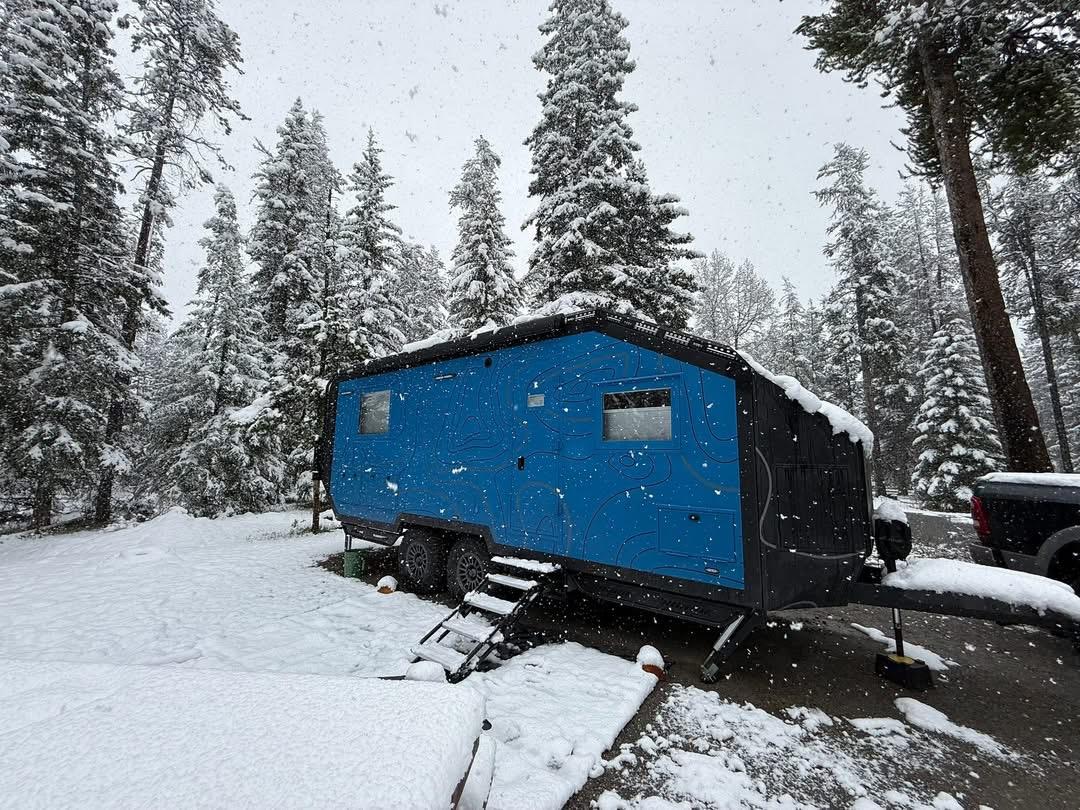
Armor paint on galvanized steel.
Made for branches, gravel and trail rash.
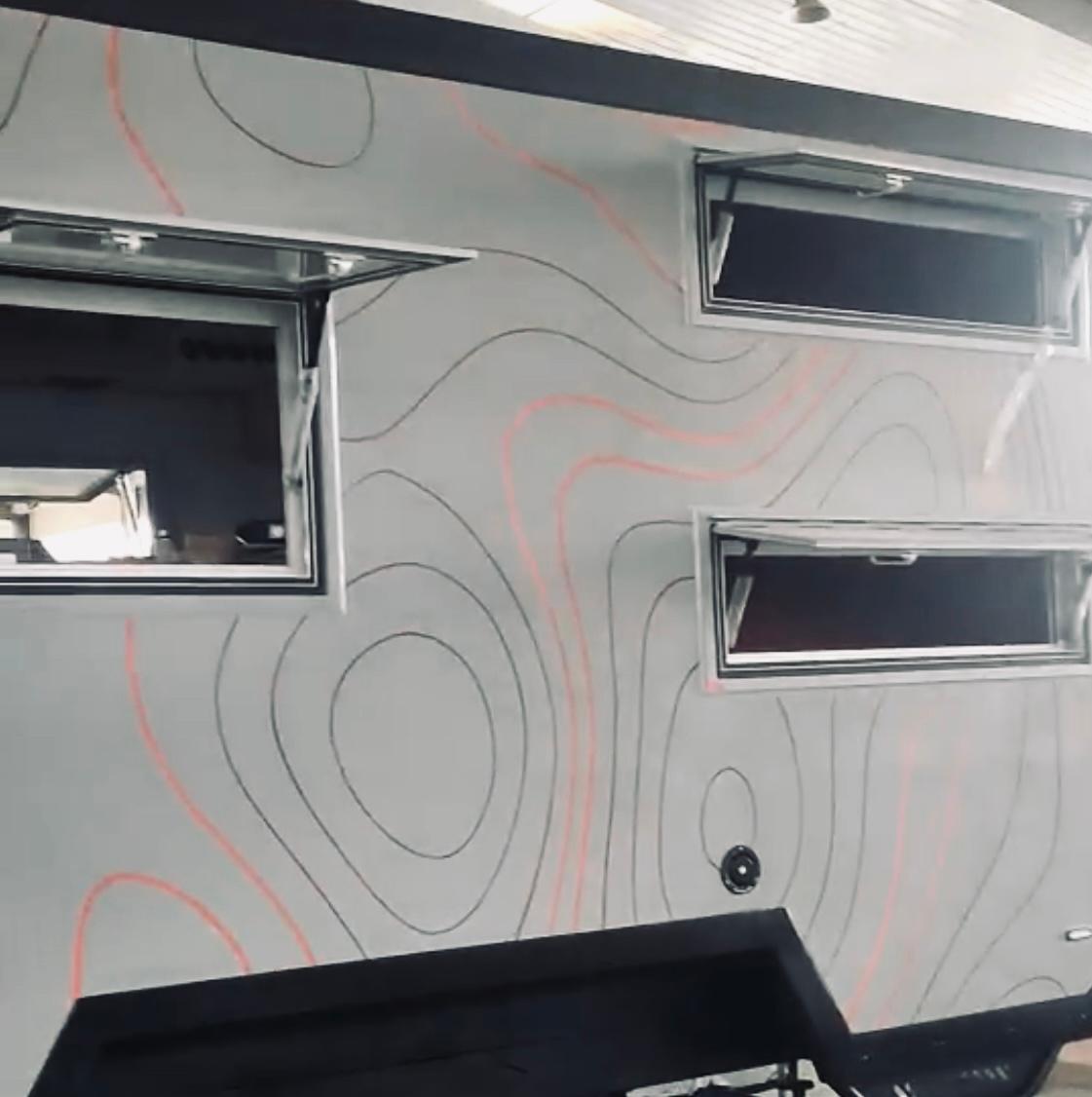
Armor paint shrugs off what would scar ordinary paint or gelcoat. Under it is aluminum, which does not crack like fibreglass.
The shell sits on a 700L steel chassis, hot dip galvanized and then painted black.
- Chassis
- 700L steel · hot dip galvanized
- Frame warranty
- 15 years
- Craftsmanship warranty
- 2 years
One system, built by us.
From your order to your campsite.
Every RREV runs RREV OS. One system, built by us: configure and order online, follow your build in your portal, then see and control your rig from your phone.
Most makers bolt together other companies’ screens and apps. We wrote ours, so it works as one thing, and we can keep improving it after you take delivery.
- 01Configure
Build and price your rig online.
- 02Order
Deposit and agreement in your portal.
- 03Build
Follow your rig through the shop.
- 04Camp
See and control your rig from your phone.
A person on every question.
Nothing gets lost in a text thread.
You ask in your portal. A named person picks it up. You both see where it stands until it is closed.
“Every question is a ticket with a person on it. You can see its status, and so can we.”
A cheaper rig can match one or two of these. Adding the rest later costs more than buying them built in.
All six are in every RREV, at the starting price.
Same build in every size.
| Spec | Outland Edition | Baja Edition | Titan Edition |
|---|---|---|---|
| From | $122,100 | $160,000 | $214,500 |
| Wall / floor panel | 70 / 80 mm | 70 / 80 mm | 70 / 80 mm |
| Dry Weight | 5,000 lbs | ~5,952 lbs | 6,300 lbs |
| GVWR | 7,800 lbs | 8,500 lbs | 9,000 lbs |
| Water Capacity | 65 Gallons | 91 Gallons | 100 Gallons |
| Battery Bank | 24v 280AH Lithium (upgradeable to 560AH) | 24v 400AH Lithium (upgradeable to 800AH) | 24v 400AH Lithium (upgradeable to 800AH) |
| Solar | 2x 450W | 3x 450W (upgradeable to 4x) | 3x 450W (upgradeable to 4x) |
| Temperature Range | -20F to 120F | -20F to 120F | -20F to 120F |
| Warranty (Frame) | 15 Years | 15 Years | 15 Years |
Build times are live on the build board.
Straight answers.
- Is there any wood in a RREV trailer shell?
- No. The walls, floor and roof are composite panels: an aircraft-grade aluminum skin outside, a fibreglass skin inside and a structural PET foam core. There is no wood in the shell, so nothing in it can rot.
- How thick are the walls and floor of a RREV?
- Walls are 70 mm (2.75 in) thick and the floor is 80 mm (3.15 in). The core is closed-cell PET foam at 90 kg/m³, dense enough to carry load as well as insulate.
- Are RREV windows glass or acrylic?
- Glass. RREV uses dual-pane glass windows in aluminum frames with polyamide thermal breaks. Glass does not scratch, haze or yellow the way acrylic does.
- What is a polyamide thermal break?
- A polyamide strip that separates the metal on the outside from the metal on the inside, so cold cannot travel through the aluminum. A RREV shell has nine of them, and the window and door frames are built the same way, so they do not sweat or frost in winter.
- Can you camp in a RREV in winter?
- Yes. Every RREV is rated from −20°F to 120°F. A Truma Combi diesel heater warms the air and the water, and every tank except grey sits inside the heated shell, so you can camp in January without winterizing.
- What is the RREV chassis made of?
- 700L steel, hot dip galvanized and then painted black. The frame carries a 15-year warranty and craftsmanship a 2-year warranty.
- What software does a RREV run?
- RREV OS, written by RREV. One system covers configuring and ordering online, following the build in the portal, and seeing and controlling the rig from a phone.
- Does RREV sell through dealerships?
- No. RREV has no dealerships. Every rig is configured and ordered direct from RREV at rrev.shop, and support comes from RREV.
- Why does a RREV cost more than other trailers?
- It is priced against what it takes to build one properly: composite panels with no wood, dual-pane glass, thermal breaks, four-season heat, armor paint on a galvanized chassis, its own software and real support. All of it is standard at the starting price.