
A first look at the line that will build the next Outland — station by station, in simulation, before a single weld.
Outland Edition · one complete build
Every RREV that has left our shop so far was built by hand, by a small crew that knows each rig by its serial number. We like it that way. It is also the reason a build takes months and a production slot is hard to get. So for the past year we have been designing what comes next: a line that builds our rigs the way we build them today, only without waiting on a calendar. We call it RREV Forge. The Outland Edition is the first rig we have taken through it.
Today we are sharing the first look. Not a rendering of a building, but a working simulation of the line itself, driven by the real bill of materials of the Outland Edition. 224 line items. 19 categories. Every part placed in the order our build book says it should be.
Step two of the master plan
Let the fleet teach the factory — before the factory exists.
RREV Forge is that step made concrete: the line that will build our rigs, proven in simulation first — starting with the Outland. Read the master plan →
What you are watching
The video follows one trailer down seven stations.
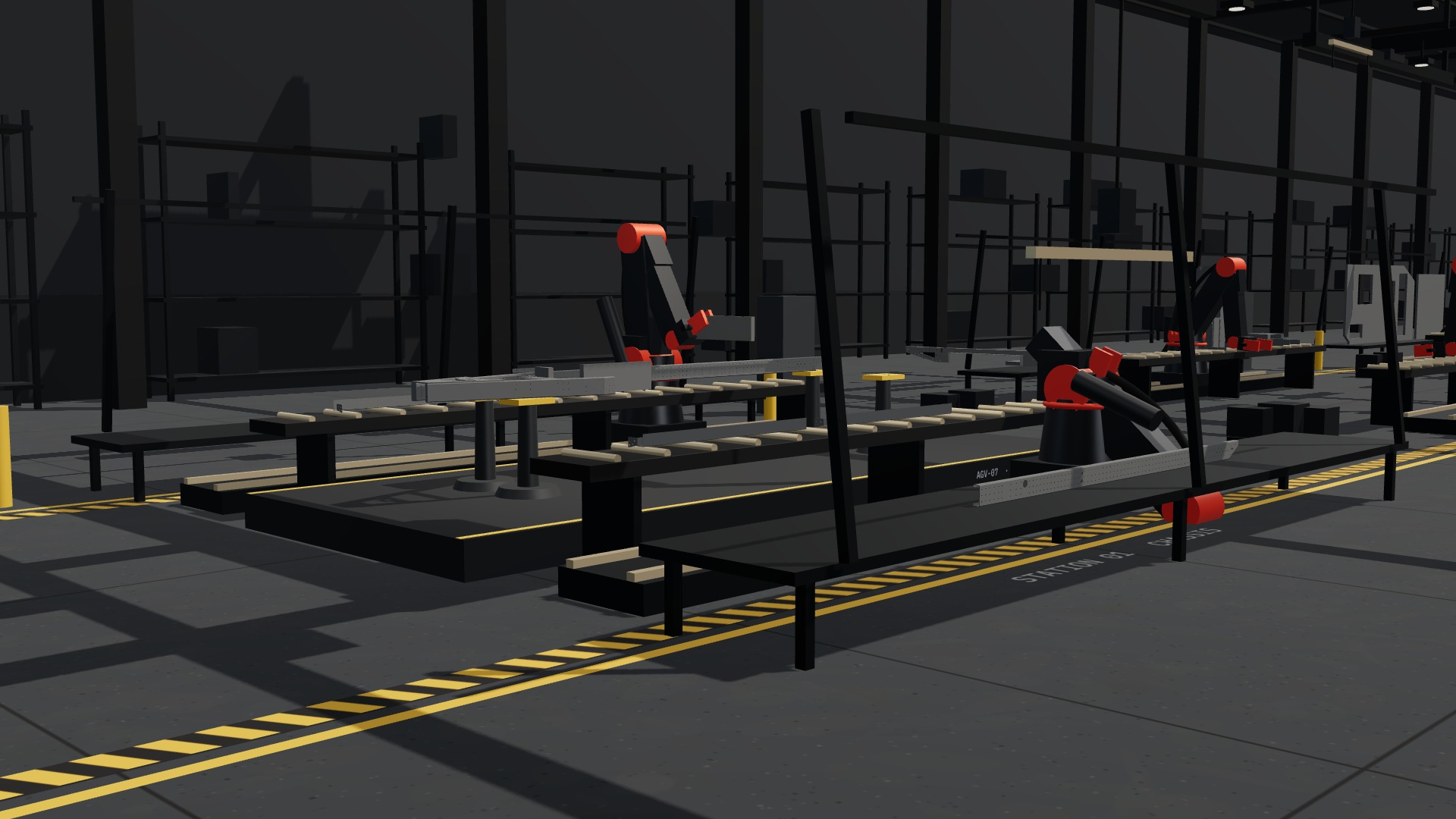
Chassis. The modular frame goes together on stands: rails, cross members, hitch plate, torqued as one ladder. No running gear yet. The trailer does not touch a wheel until the very end.
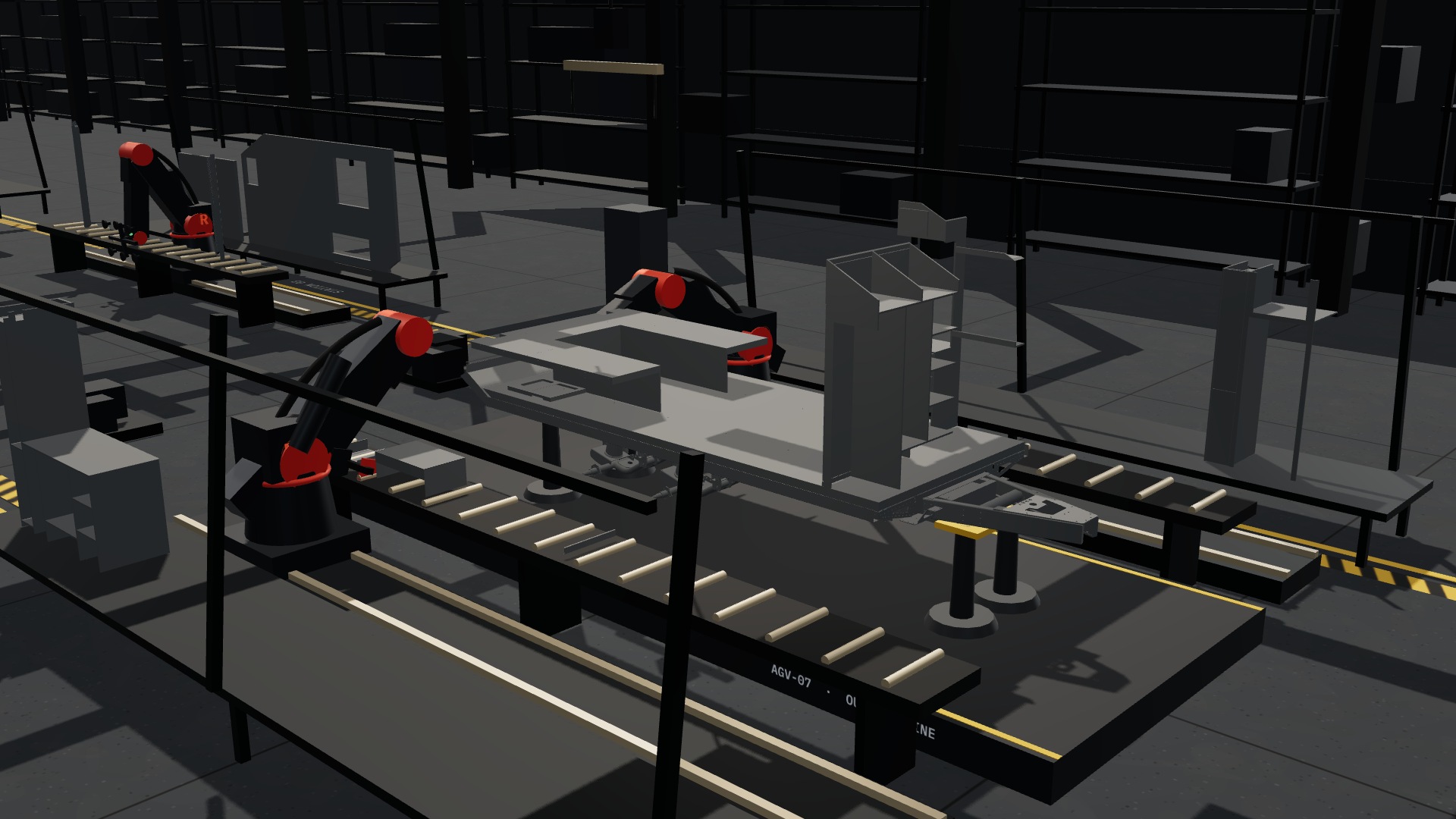
Floor and interior. The composite deck comes down onto the frame, and the furniture is set on the open deck before any wall exists. Bed platform, cabinets, bench, equipment. This is the part most factories get backwards. Fitting cabinetry through a door after the box is closed is how you scratch a box.
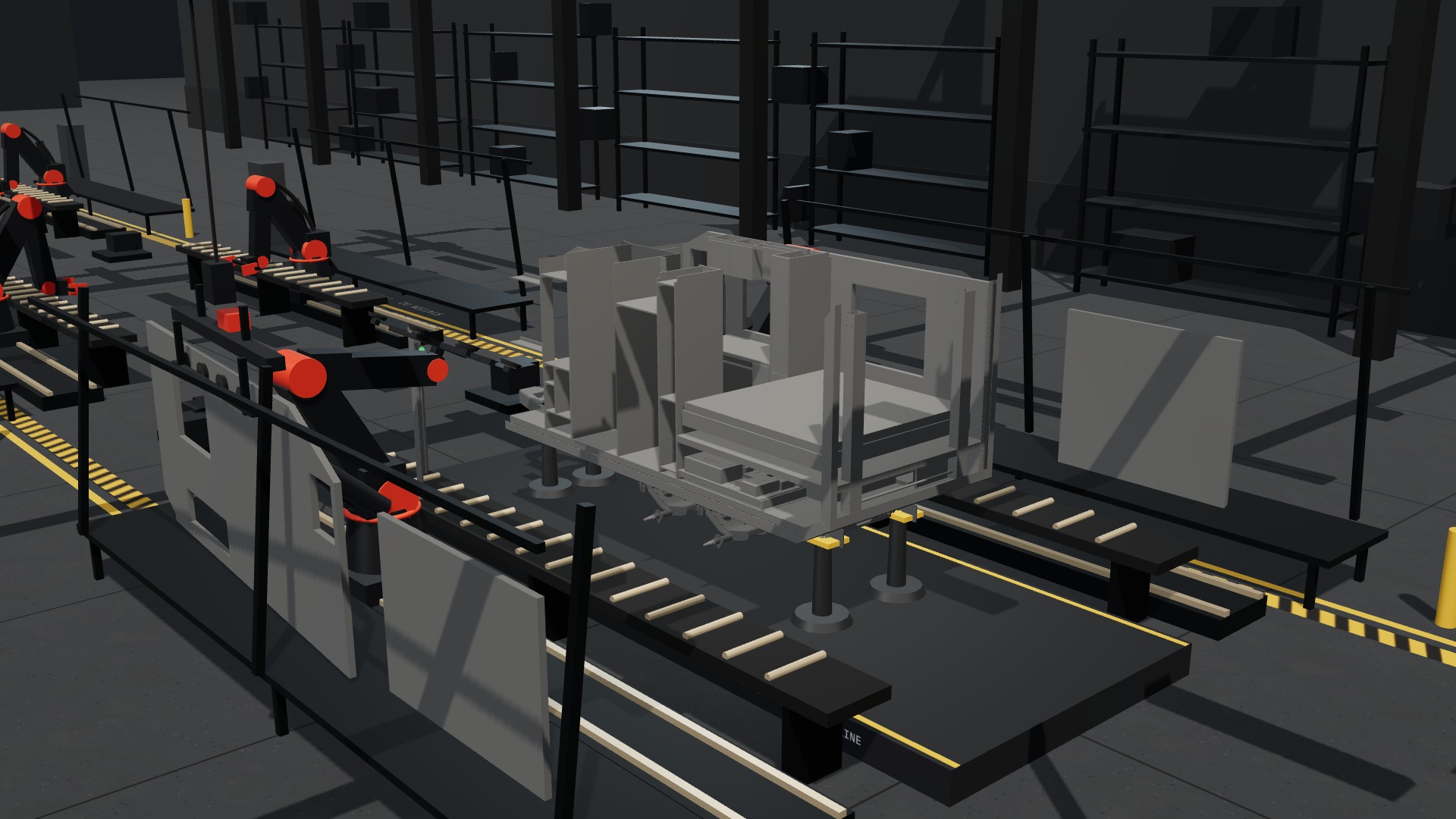
Walls and headers. Corner posts first. Then the side skins arrive hanging vertical on a vacuum lifting beam, come down onto the floor edge, and get steadied and set plumb by a robot with a vacuum frame on the outside skin. The end walls follow, then the headers close the top of the cage.
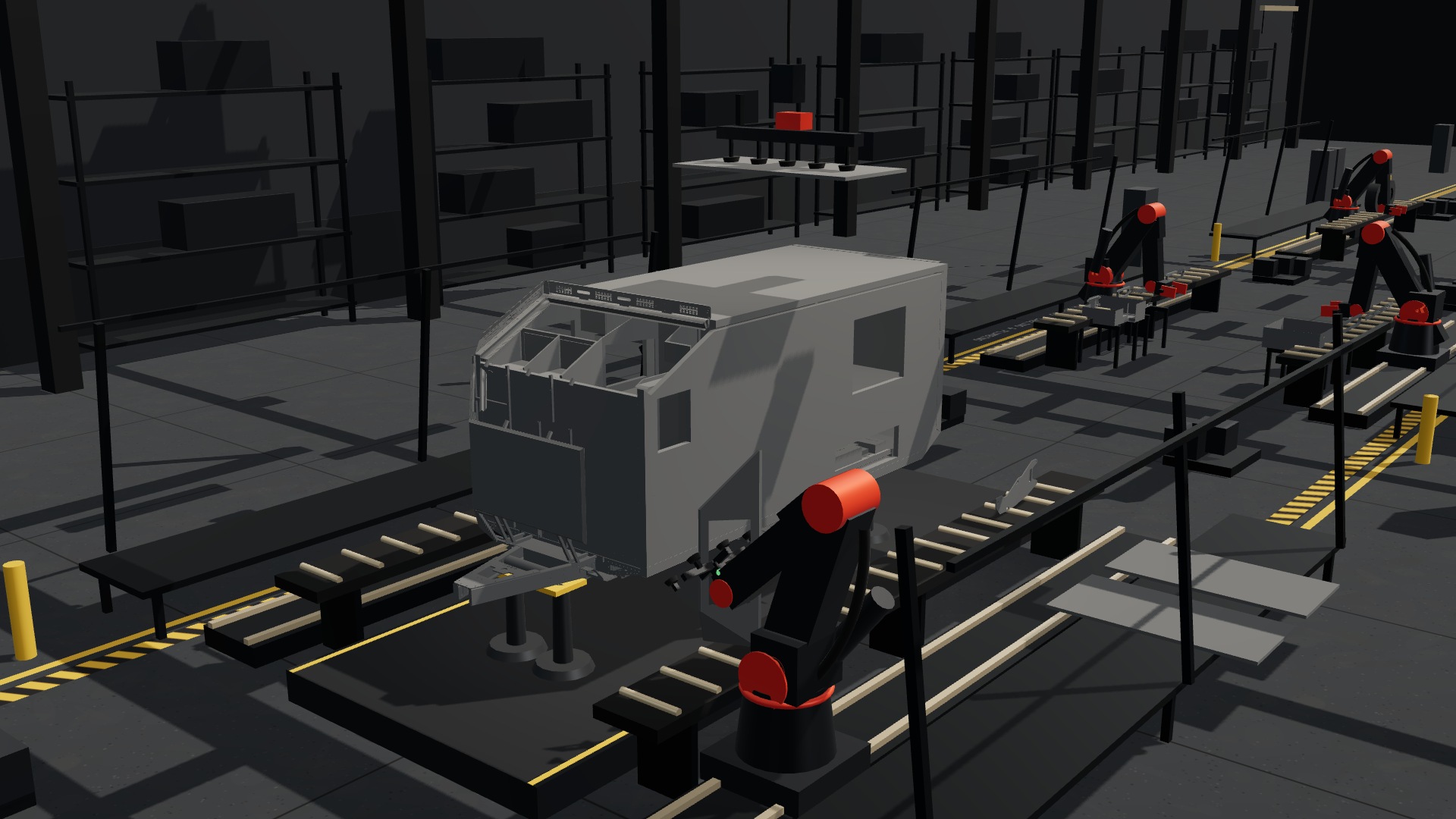
Exterior fitment. Roof sheet, three 450W solar panels and the rack from above. Front locker, rear door and the swing-out galley from the side.
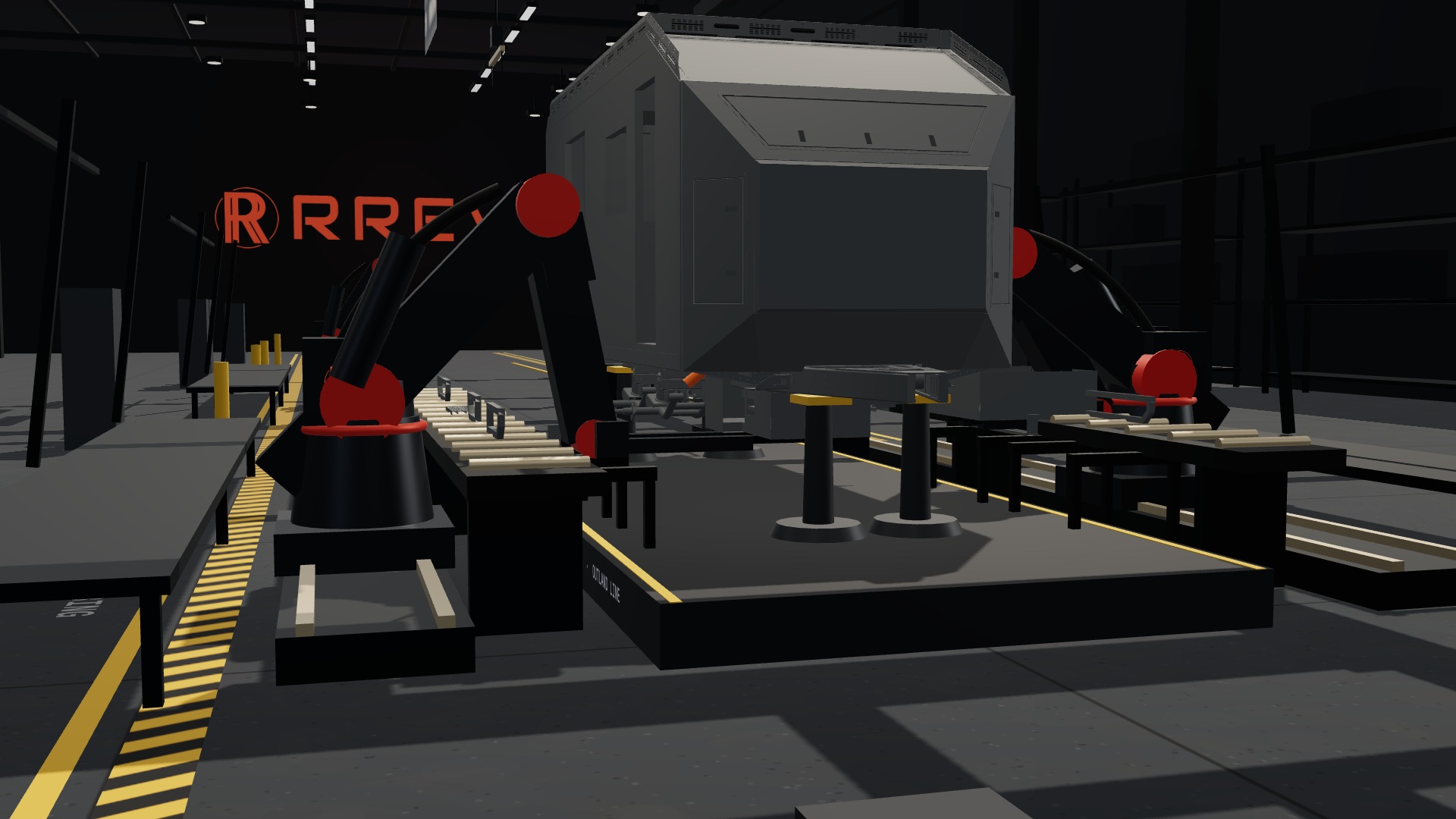
Cabling and plumbing. Looms and water lines run through the frame and over the walls. The under-floor storage boxes are forked in level from pallet stands and lifted into the rails, the way you would do it on a lift.
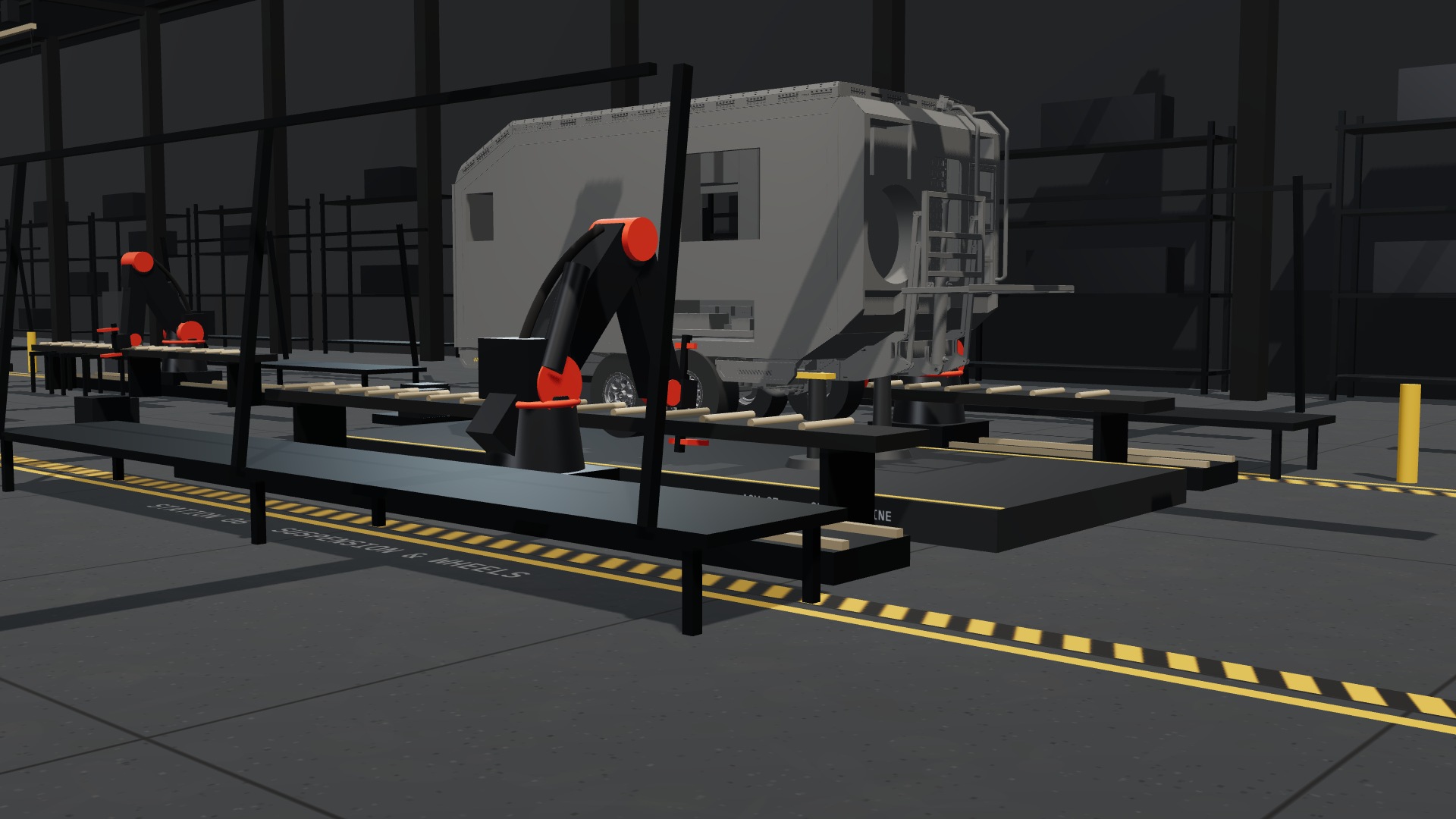
Suspension and wheels. Trailing arms, shocks and hubs from below. Wheels carried in and spun onto the hubs. The fixtures retract, and the trailer settles on its own springs for the first time.
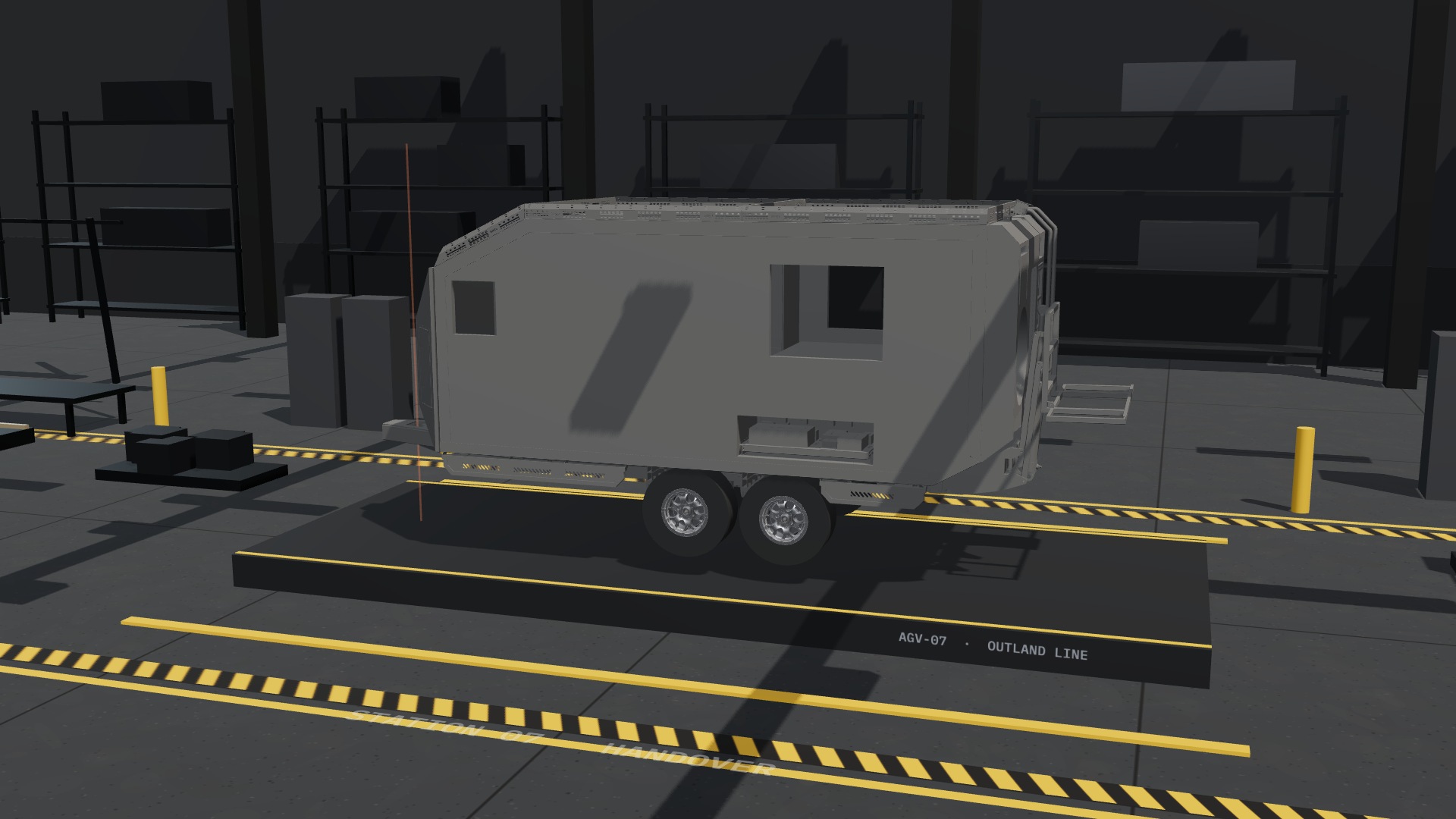
Handover. Every line checked against the bill of materials. Keys.
Why we simulate first
Because a line is a set of decisions, and decisions are cheap to change on a screen and expensive to change in steel. Building the Forge as a simulation let us ask the questions that matter before we buy a single robot:
- In what order do parts go in, so that nothing has to pass through something already installed?
- Which parts need suction, which need a clamp, and which need a crane?
- Where does every arm park, so it is never in the way of the next move?
- How long does a station really take when every move is physically possible?
We answered those with the same tooling we use for the trailers themselves. The line in the video runs against the manufacturing model and checks every motion for collisions.
It is honest in a way a rendering cannot be. When something looked wrong, it usually was — and we changed the sequence.
What this means for owners
Nothing changes about how a rig is finished. The skin, the topography, the textures inside, the four-season shell rated to −20°F, the hardware we choose because it survives Baja. What changes is the wait, the consistency, and the record. Every rig from the Forge will carry a build record down to the line item — exactly what our owners already see in their Garage today for the rigs we built by hand.
We will share more as the line moves from screen to floor. For now, watch a trailer get built in 2:39, and see where your own build would start.
RREV Forge is a design study and simulation of our future production line, built from the Outland Edition manufacturing model. Serial numbers and build data shown are placeholders.